Showing posts with label boatbuilding. Show all posts

Saturday, 30 April 2016

Splashdance.


     "The plan was set, the plan was done..."
                                                 -Steely Dan


   Every year, the boats come out of the water aroundabout Halloween-ish.  Every fall, I think to myself,

    "This winter, it's going to be different.  this winter, I am going to make a list of all the boatprojects that we want to complete, and I will schedule them over the next six months, so that we're not busting ass at the last minute, racing a ticking clock, as we run up against the immovable barrier of our splash date."

   Yeah, I think that.

  The reality is always entirely, frantically, different...

  Five and a half months go by and suddenly the world looks like this:


and I look like this:
                                                                                                                        - image courtesy of reddit

      With a big ol' procrastination -driven project backlog monkey on my back.


   Inevitably. our spring splash punchlist gets prioritized, with projects falling into three categories:

  1. Shit that absolutely has to get done before the boats get dropped in the water,  or they don't happen.  Or the boat sinks.

  2.  Shit that was scheduled to get done before we splashed, but who the hell am I kidding?

  3. Shit that gone done on, or ahead of, schedule, purely by accident, or because, rarely, it is easier and simpler than we thought it was going to be.

   Well, all the 3. stuff has been done, now it's just 1. and 2. fighting to finish.

    We splash Karma May 6.  Ereni will splash at a later date, which buys us some time.
But, the next few nights after work are going to be jam-packed with fun stuff like (in no particular order):

   1. Installing a new/used swim platform (including modifying mounting brackets, reshaping platform, finishing trim to finish platform, cutting backing plates, and actual installation.)

   2. Installing a topping lift.

   3. Installing a 100 w semi-flexible solar panel.
   
   4. Installing a new charge controller, and a new starting battery, wiring both existing batteries into a house bank, and installing a new Xantrex Echo Charger to simplify our charging system.
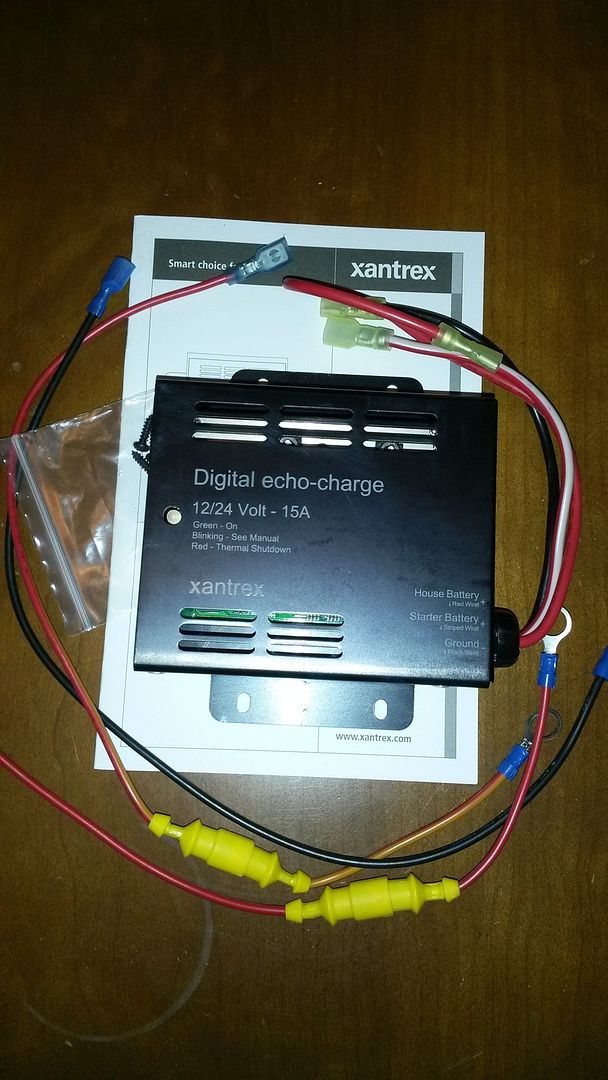


     5.  Raising and stiffening bimini, installing longer frame stringers on rigid solar panel frame to solve top sag problem, install a couple of additional struts to stiffen the frame.

     6.  Cleaning and rebuilding the cabin cushions.
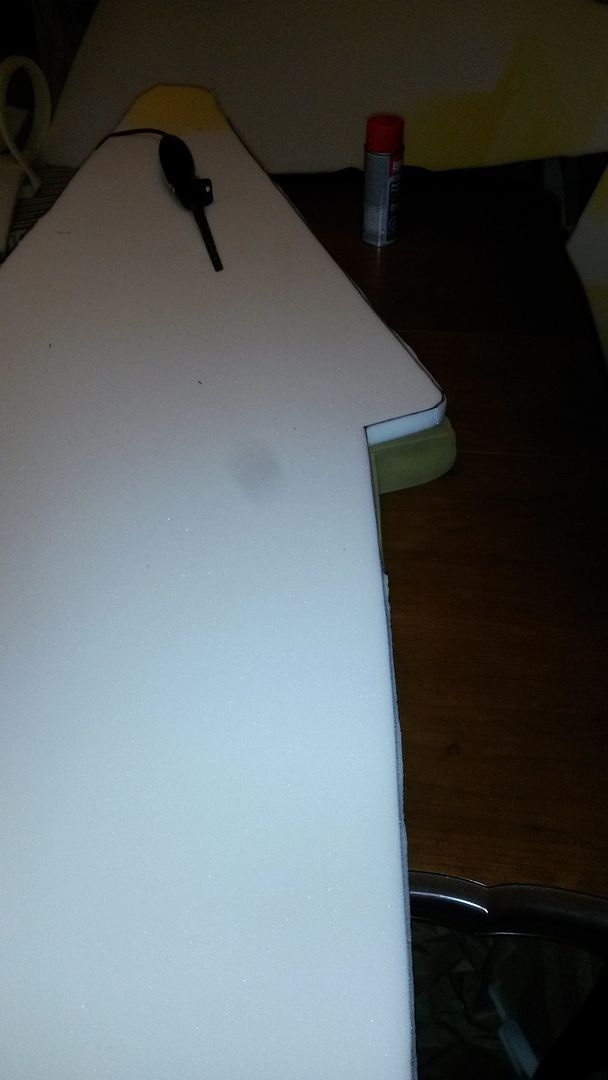
         
 
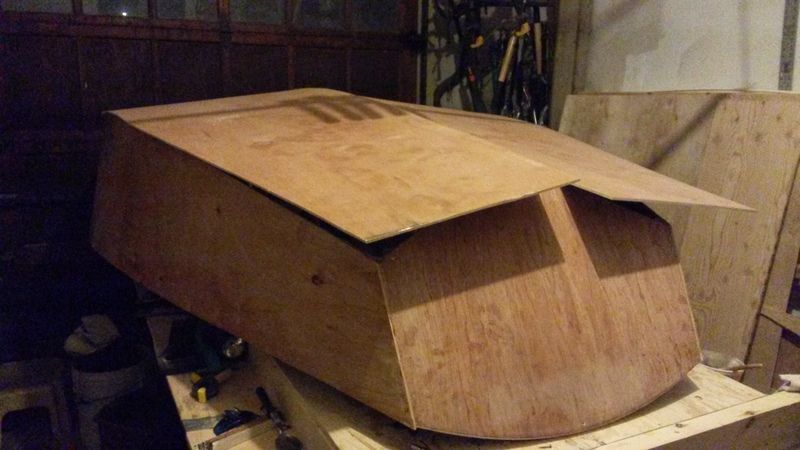
     7.  Finishing the construction of the first SUMO dinghy.
   

     8.  And, of course, sanding and painting the bottom, and finishing washing and waxing the topsides.


     And, dammit, I love every minute of it.  The next best thing to being on the water is getting the boats ready for the water, stress and all.  The best part of the next best thing is that SWMBO is right alongside, busting hump with me.

     It beats the hell out of winter.

     Six days left.

     We'll be (mostly) ready.

     I think.


     Thanks for stopping by!  Please take the time to "Talk the Dock," and pass the word.


Thursday, 18 December 2014

A Winter's Ponderings


"You'd be well on your way, if you could only set sail..."
                             -Kenny Loggins


Long nights, short days, water too hard to sail in, and an off-season maintenance punchlist with an emphasis on sanding, sanding, more sanding and refinishing leaves me with lots of time to think.

    (I’m not entirely sure this is a good thing- ed.)

     As I sand cockpit grates, cockpit tables and companionway doors preparatory to their semi-annual renewal coat of varnish, and consider new projects that will turn big pieces of wood into smaller pieces of wood and large piles of sawdust,  I find myself pondering: 

    Why do I do this, this varnishing thing? 

    Why don’t I use that newfangled synthetic, fast-drying, easy to apply, orangey-looking stuff that so many sailors swear by, that requires only two coats, and a lot less sanding?   It would take so much less time, and it works almost as well, and it looks almost the same and… 

…and it ain’t right.


    As I was laying down the finish coat, watching the varnish bring the grain to life, I realized that there is something zen about varnish.  The smell, the feel , the magic as it goes on, the connection to dozens of generations of boatkeepers who have gone before ,  doing the same off-season refinishing job, and likely asking themselves “Why?”


  Varnish is about keeping the fire.


  To me, that is a big part of the appeal of sailing:
  We're keeping the fire.

   But that fire grows a little dimmer, every year.

    Here’s what I mean:

    For millennia, sailing vessels were constructed of wood, with sails and lines of natural fibre, caulked and sealed with vile tarrish concoctions boiled over a fire from ingredients fit for neither man nor beast.  Legend says that any brew too thin to seal wooden boats was re-marketed to the pub trade under the brand name Guinness, and any goop too thick to caulk a hull was jarred and sold as Marmite.

(Hey, watch it! I like Marmite! – ed.)

    For centuries the traditions were handed down, from wright to wright and boatswain to boatswain, and while there was advancement in design, materials and construction methods stayed pretty much the same.    A 15th century boatbuilder would have gotten along pretty well in an early 20th century boatyard, since the tools and techniques hadn’t changed much. 

    Aboard, the same pattern held true.  Lanterns and lamps dimly lit the way for centuries, flags were the only option for communication beyond range of voice and navigation was an arcane art of sun shots and celestial scrutiny.

       The fire was kept, the torch passed, from one generation to the next.

      Then, in a span of less than five decades, the world of small boats saw more technological advancement than had been seen in the entirety of the past five millennia.
   Within the last half of the 20th century, fiberglass had virtually replaced wood as the material of choice for production boat building.  Aluminum had virtually replaced wood for construction of spars, electric lighting had virtually replaced lanterns and lamps, radio had virtually replaced signal flags and Loran, and then chartplotters, virtually replaced the sextant and dead reckoning.

    The  great naval architect L. Francis Herreshoff might have denigrated fiberglass as “frozen snot,” …but it turned out to be very successful snot indeed.

    Thanks to snot, boats could be built faster, with less skilled labour, requiring less maintenance.
    The upside was that sailing became a more accessible option for the everyman. 

    The downside was that the fire dimmed.

    Skills that had been passed down for generations, from sailor to sailor, became, first, quaint,…

   … and then forgotten.

    Quick, how many of us carry a full complement of signal flags aboard?  How many of us have caulking irons and mallets in our tool bags?

     How many of us know what caulking irons are?

     Now, don’t get me wrong- I love the reduced maintenance and longer lifespan of fiberglass hulls and alloy spars and synthetic sails, and I think my radio and chartplotter are wonderful tools to have aboard.  I appreciate that I DON’T have to keep caulking irons and mallets in my toolbag…

     … however, I draw the line at slathering the wood on my craft with some synthetic that is cheaper, and easier, and faster and almost the same, if you squint.

          See, I figure there is magic in boat work, a purity of process, an adventure of design and construction that envelopes the senses- the sound of the saw, the sight of brightwork glistening, the smell of varnish... it is poetry.

       Or maybe it’s just fumes.

       Whatever it is, it ain’t much, but I’m keeping the flame, as best I can.


"Talk the Dock!"